Logo Sciencesconf

Overview

The ADBIS 2026 Doctoral Consortium School (DCS) invites doctoral students to participate in an enriching and collaborative event designed to foster academic growth, networking, and research excellence. This school will be held in Orléans, France, from September 28 to October 1, 2026, and it is part of the 30th European Conference on Advances in Databases and Information Systems (ADBIS 2026).

The DCS provides a unique opportunity for PhD students to present their research, receive feedback from experienced researchers, and engage with peers in the field of databases and information systems. The event will feature keynote talks, interactive sessions, and networking opportunities, all aimed at supporting the development of young researchers.

Participants of the DCS will also have full access to the scientific and social events of the ADBIS 2026 conference, offering a comprehensive experience to connect with the broader research community. Additionally, PhD students can earn up to 1.5 ECTS credits by participating in the school, making it a valuable addition to their academic curriculum. After the School, meritorious students will be invited to participate in a collaborative research paper to be submitted to a Special Issue related to ADBIS 2026.

Key Objectives

  • Provide a platform for doctoral students to present their research and receive constructive feedback.
  • Foster interdisciplinary collaboration and networking among young researchers.
  • Offer mentorship and guidance from leading experts in the field.
  • Encourage the exchange of ideas and methodologies in databases and information systems.

Program Overview

The ADBIS 2026 DCS will span four days and include the following activities:

  • Keynote Talks: Inspirational talks by leading researchers in databases and information systems (some shared with the ADBIS 2026 conference).
  • Research Presentations: Participants are invited to submit a Fresh Thinking Talk, the new format introduced by ADBIS 2026 for young researchers to pitch research ideas that they wish to share with the whole community.
  • Interactive Sessions and Mentoring: Group activities supported by experienced researchers to address specific research or personal challenges, promote proactive discussions, and foster collaboration.
  • Networking Opportunities: Connect with fellow PhD students, academics, and industry professionals to build long-term collaborations. Participation in all social activities of ADBIS 2026 is included.

Keynote Speakers

Click on the speaker to view full details

Research Innovation Sprint

The DCS will feature the Research Innovation Sprint, a dynamic and interactive activity designed to foster collaboration and innovation among young researchers. Developed across the four days, participants will form diversified teams, develop original research ideas, and refine their vision with guidance from expert mentors. The experience culminates in a pitch session, where teams present their concepts and receive constructive feedback from their peers.

  • Finding Common Ground. Participants will be subdivided into heterogeneous groups - based on their expertise and research interests - and will engage in a brainstorming activity to identify a joint research opportunity.
  • From Concept to Collaboration. The teams will receive expert feedback from senior researchers and mentors, who will help develop the collaborative research idea.
  • The Grand Pitch. Teams will deliver their pitch presentations to peers and mentors and exchange constructive feedback.

After the end of the DCS, students who stood out for their participation and cooperation in the DCS will be invited to write a collaborative paper, to be submitted to a Special Issue related to ADBIS 2026. The paper will aim to collect and expand the proposal into solid visions, including a review of related literature and the identification of the main challenges to be addressed. Invitations will be sent after the end of the DCS and will be subject to the observed engagement of students in the DCS activities, as well as on the novelty and potential behind the research idea proposed at the Grand Pitch.

By bringing together a diverse community, the event aims to inspire new ideas, promote cross-disciplinary interaction, and create opportunities for networking and mentorship. Importantly, it does so in a deeply respectful way and inclusive of all participants, ensuring that everyone feels valued and welcomed.

Eligibility

The DCS is open to PhD students at any stage of their research journey. Applicants should be working on topics related to databases, information systems, or closely related fields. Priority will be given to students who are in the early or middle stages of their PhD, as the school aims to provide guidance that can significantly impact their research trajectory.

Submission Guidelines

Interested participants are required to submit the following materials:

  1. Research Abstract: A concise summary of your research (max. 2 pages) including:
    • Research problems and objectives.
    • Methodology and current progress.
    • Expected contributions and challenges.
  2. CV: A brief curriculum vitae highlighting your academic background and research experience.
  3. Letter of Recommendation: A letter from your PhD supervisor endorsing your participation in the Doctoral Consortium School.

Submissions should be made via the form linked below. Applications will be open from April 1 to July 1, 2026 (AoE deadline).

All applications will be reviewed by the DCS organizers to select participants and assign reduced fees. Applicants will finally be notified and asked to proceed with the payment in case of acceptance. Rejected applicants may be re-contacted at a later stage if new slots become available.

Application Form

Available here

Important Dates

All deadlines are 11:59 PM AoE

  • Application opens: April 1, 2026
  • Application deadline: July 1, 2026
  • Notification of acceptance: July 8, 2026
  • Payment due: July 22, 2026
  • School: September 28 - October 1, 2026
  • Invitations to collaborative paper: October 15, 2026

Benefits of Participation

  • Feedback and Mentorship: Receive expert feedback on your research from leading academics and industry professionals.
  • Networking Opportunities: Connect with peers and established researchers in the field.
  • Certificate of Participation: All participants will receive a certificate acknowledging their contribution to the DCS.
  • ECTS Credits: PhD students can earn up to 1.5 ECTS credits by participating in the school, making it a valuable addition to their academic curriculum.
  • Publication Opportunity: Meritorious students will be invited to participate in a collaborative research paper to be submitted to a Special Issue related to ADBIS 2026.

Registration fees and cost

  • Full Fee 450€ and Reduced Fee 350€ (conditioned to evaluation of students’ situation and under guidance of DEI criteria). There is only a limited supply of Reduced Fee registrations available. 
  • The participation fee includes coffee breaks and lunch served all days, and a gala dinner as part of the DCS.

In addition to the participation fee, the selected participants are expected to pay for their lodging and travel expenses.

Contact Information

For further information, please contact the Doctoral Consortium School Chairs at adbis26-dcs@sciencesconf.org

Query Optimization in the Wild: From Cross-platform Data Systems to Multi-Agent Systems

Query optimization is (or should be) at the core of any data management system. Without effective and efficient query optimization, even a sophisticated data system is bound to underperform. In this talk, I will first share our query optimization journey in Apache Wayang, an open source framework designed to unify analytics across diverse data sources and data processing engines. I will begin with traditional cost-based optimization and show its limitations in cross-platform settings. I will then briefly discuss learning-based approaches and explain why, despite their promise, they still struggle when optimization depends on enumerating a huge search space of plans. Motivated by these limitations, I will then introduce a different perspective on query optimization: a generate-and-explore approach that replaces the traditional enumerate-score-prune methods with generative models and an exploration-driven feedback loop. I will conclude my talk by motivating the need for query optimization in multi-agent systems, an emerging class of data systems in which multiple agents must coordinate, reason, and adapt to deliver meaningful insights.

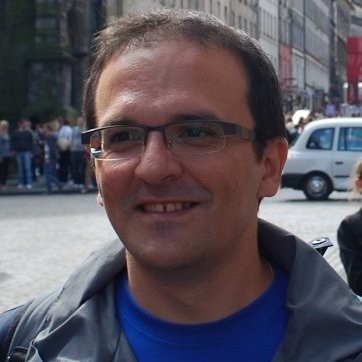
Zoi Kaoudi is an Associate Professor at the IT University of Copenhagen. Her research interests lie in the intersection of machine learning systems, data management, and knowledge graphs. She has previously worked as a Senior Researcher at the Technical University of Berlin, as a Scientist at the Qatar Computing Research Institute (QCRI), as a visiting researcher at IMIS-Athena Research Center, and as a postdoctoral researcher at Inria Saclay. She received her Ph.D. from the National and Kapodistrian University of Athens in 2011. She is currently a Proceedings and Metadata Chair of ISWC 2023. Previously, she has been an Associate Editor of SIGMOD 2022, proceedings chair of EDBT 2019, co-chair of the TKDE poster track co-located with ICDE 2018, and co-organizer of the MLDAS 2019 held in Qatar. She has co-authored articles in both database and ML communities and served as a member of the Program Committee for several international database conferences. She has recently received the best demonstration award at ICDE 2022 for her work on training data generation for learning-based query optimization.

Reproducible Query Optimization Research for Data Systems

Identifying reasonably good plans to execute complex queries in large data systems is a crucial ingredient for a robust data management platform. The traditional cost-based query optimizer approach enumerates different execution plans for each individual query, assesses each plan based on its costs, and selects the plan that promises the lowest execution costs. However, as we all know, the optimal execution plan is not always selected, opportunities are missed, and complex analytical queries might not even work. Thus, query optimization for data systems is a highly active research area, with novel concepts being introduced continuously. A wide range of proposals, from novel cardinality estimation methods to alternative physical operation selection strategies, have been proposed. However, qualitatively and quantitatively assessing their individual strengths and weaknesses is almost impossible. We thus introduce PostBOUND, a novel optimizer development and benchmarking framework that enables rapid prototyping and common-ground comparisons, serving as a community base for reproducible optimizer research.

Wolfgang Lehner is full professor at TU Dresden, Germany, leading both the Database Technology Group and the Institute of System Architecture. He is primarily interested in cross-cutting data management themes, ranging from complex analytical tasks and workflows to technologies that push the envelope in compiling and runtime of a data system. He is serving the international database community in various capacities (e.g., Vice-President of the VLDB Endowment, PVLDB Management Editor, and PC Co-Chair/MetaReviewer/Reviewer activities). He is an appointed member of the German Council for the Sciences and Humanities as well as a member of the Academy of Europe. He also holds a part-time professorship at the University of Aalborg, Denmark, and is a Fellow of the ACM.

Data for the (Press) People: Using AI to Help Journalists Make Sense of Interesting Data

The harmful impact of disinformation on society and individuals is large and growing. Reliable knowledge about the world, and about our information space, can be leveraged to diminish this negative impact. I will present research carried in my team to leverage two kinds of reference information. In the StatCheck project, transferred to RadioFrance, we focus on making high-quality statistics available and easy to search. In the FactCheckBureau, we show how to retrieve previous fact-checks on a topic in order to detect recycled rumors, and save the effort involved in checking again the same claim. AI, and in particular Natural Language Processing, is instrumental in both projects, for retrieval and classification; Reinforcement Learning is crucial for actually accessing statistic data.

Joint work with Oana Balalau, Simon Ebel, Théo Galizzi, Garima Gaur (Inria), Pierre Senellart, Antoine Gauquier (ENS and Inria), and other colleagues.

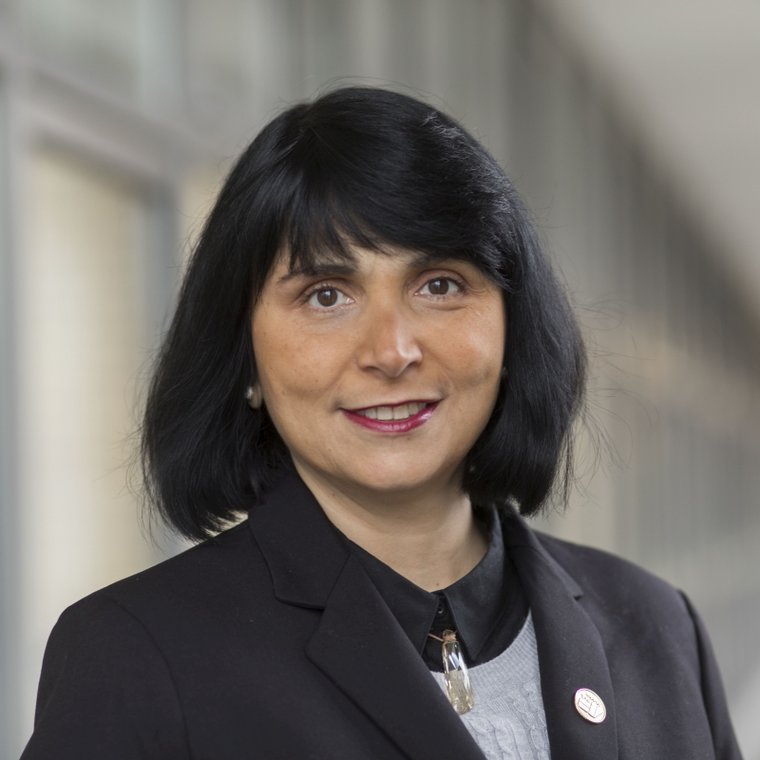
Ioana Manolescu is a senior researcher at Inria, in France. She is the lead of the CEDAR INRIA team focusing on rich data analytics at cloud scale. She is also the president of BDA, the French national scientific association focused on data management. She is or has been a member of the PVLDB Endowment Board of Trustees, of the ACM SIGMOD Executive Committee, as well as program chair, general chair, and editorial roles in major conferences and journals such as PVLDB, PACMOD (formerly SIGMOD), ICDE, CIKM etc. She is a Senior ACM member and a recipient of the ACM SIGMOD 2020 Contribution Award. Her main research interests encompass blending Data and AI methods for working with complex, semistructured data, in particular for large heterogeneous text-and-data graphs. In the last decade, her research has tackled several problems raised by journalistic fact-checking and investigative journalism, an area where she has collaborated successfully with journalists from Le Monde and RadioFrance.

NebulaStream – Data Stream Processing for the Edge-Cloud-Continuum

Modern data-driven applications arising in such domains as smart manufacturing, healthcare, and the Internet of Things, pose new challenges to data processing systems. Traditional stream processing systems, such as Flink, Spark, and Kafka Streams are ill-suited to cope with the massive scale of distribution, the heterogeneous computing landscape, and requirements, such as timely processing and actuation. Classical approaches like managed runtimes, interpretation-based query processing, and the optimization of single queries that neglect interactions, greatly limit throughput, latency, energy-efficiency, and the general usability of these systems for emerging applications involving distributed data processing at scale in a sensor-edge-cloud-environment.

To overcome these limitations, we are researching and building NebulaStream, a novel open-soruce data stream processing system for massively distributed, heterogeneous environments. NebulaStream supports (potentially resource-constrained) heterogeneous devices, a hierarchical topology (with the distribution of computation and data flow in a cloud-edge-continuum), and the sharing of computations and data across multiple concurrent queries. This presentation discusses the design goals and core concepts of NebulaStream and looks back at inspirations drawn from our prior work on Stratosphere and Apache Flink, among others.

Volker Markl is a German Professor of Computer Science. He leads the Chair of Database Systems and Information Management (DIMA) at TU Berlin and the Intelligent Analytics for Massive Data Research Department at the German Research Center for Artificial Intelligence (DFKI). In addition, he is Director of the Berlin Institute for the Foundations of Learning and Data (BIFOLD). He is a database systems researcher, conducting research at the intersection of distributed systems, scalable data processing, and machine learning. Between 2010 - 2015, Volker led the DFG-funded Stratosphere project, which resulted in the creation of Apache Flink. He has received numerous honors and prestigious awards including two ACM SIGMOD Research Highlight Awards and best paper awards at leading conferences, such as ACM SIGMOD, VLDB, IEEE ICDE, and EDBT. In 2020, he was named an ACM Fellow for his contributions to query optimization, scalable data processing, and data programmability and earned the ACM SIGMOD Systems Award for Apache Flink in 2023. In 2014, he was elected one of Germany's leading “Digital Minds“ (Digitale Köpfe) by the German Informatics Society. He also is a member of the Berlin-Brandenburg Academy of Sciences (BBAW) and serves as advisor to academic institutions, governmental organizations, and technology companies. Volker holds eighteen patents and has been co-founder and mentor to several startups.

When Generative AI Meets the Data Lifecycle: New Capabilities, New Responsibilities

Oscar Romero is a Full Professor at the Universitat Politècnica de Catalunya (UPC) and Vice-Dean for Postgraduate Studies at the Facultat d’Informàtica de Barcelona (FIB) at the same university. He is also a member of the DTIM research group. He began is research career in the field of Data Warehousing, focusing on the automation of data warehouse modelling and ETL workflows. Since then, his research has evolved toward more complex scenarios, including Big Data, Data Science, and data-driven Artificial Intelligence, always with the overarching goal of operationalising and automating the different stages of the data lifecycle in data-intensive systems. To date, he have published more than 100 papers in leading venues and have served on the programme committees of top-tier conferences such as VLDB, ICDE, EDBT, WWW, ISWC, and IEEE Big Data. He have supervised nine PhD theses and participated in over 20 research projects, including H2020 and Horizon Europe initiatives, Erasmus Mundus Joint PhD and Master programmes (IT4BI, IT4BI-DC, BDMA, DEDS and DEAI), as well as several national projects. He have also established more than 15 research and technology transfer contracts with leading IT companies.

Ethical & Equitable Data Science: Bridging Social Justice and Technical Innovation

This talk introduces Freda, a methodology for designing ethical, frugal, and equitable data and algorithm-driven science. It bridges technical innovation with social justice by integrating data sovereignty, fairness-aware analytics, and community-in-the-loop infrastructure. Rooted in decolonial and feminist perspectives, Freda addresses transparency, accountability, and epistemic diversity through policy-aware Spark pipelines, federated learning, and negotiated resource dispatching. A case study illustrates how sovereignty-aware pipelines enable community control, minimize extractivism, and embed plural, justice-centered values into AI systems.

Genoveva Vargas-Solar is a CNRS principal scientist (exceptional class) and a member of the Database group at the LIRIS lab in France. From 2008 to 2020, she was deputy director of LAFMIA, an international research unit at CINVESTAV. A regular Mexican Academia of Computing member, she has organized numerous international conferences, workshops, and thematic schools, such as EDBT Summer Schools (2009, 2013) and the Franco-Brazilian School on Smart Cities and Big Data (2015, 2017). She has edited several conference publications and served on program committees for major journals and events in databases and service-based programming. Her research spans fundamental and applied challenges on ARM, Raspberry, cloud, and HPC architectures, applied to e-science in Astronomy, Biology, social sciences, and Industry 4.0. She has coordinated multiple international research projects and actively fosters scientific collaboration between Latin America and Europe, particularly between France and Mexico. Additionally, she is a committed advocate for gender equity, diversity, and inclusion, serving as a gender equity officer at LIRIS and coordinating initiatives like the DEI Database Conferences.

To Be Announced

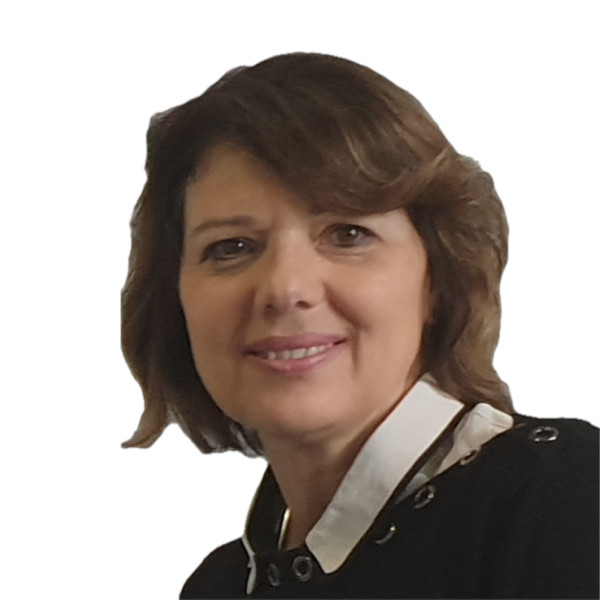
Maria-Esther Vidal is a Professor at Leibniz University Hannover and Head of the Scientific Data Management (SDM) group at TIB–Leibniz Information Centre for Science and Technology. She is also affiliated with the L3S Research Centre and holds the title of Full Professor (retired) at Universidad Simón Bolívar (USB), Venezuela. Her research focuses on semantic data management, data integration, federated query processing, and machine learning over knowledge graphs, with a strong emphasis on neuro-symbolic AI. She has pioneered methods that integrate symbolic reasoning with machine learning to achieve interpretable and trustworthy AI systems. This work has had a profound impact in domains such as medicine (e.g., supporting diagnosis and personalized treatment), bias detection and documentation (ensuring fairness and transparency in AI pipelines), and scientific data ecosystems (enabling interoperability and reproducibility across heterogeneous data sources).

Challenges and Methods in Trajectory Analytics: Data Preparation, Management, and Mining

Trajectory data are increasingly available, especially through mobility traces, and support a wide range of applications. However, they introduce specific challenges for data processing and analytics. This talk provides an accessible introduction to trajectory analytics, covering data preparation, database management, and mining techniques. It includes practical examples from environmental health and provides an overview of machine learning methods, as well as emerging trends in generative AI for mobility data.

Karine Zeitouni is a Full Professor at the University of Versailles Saint-Quentin and a member of the DAVID Lab. Her primary research interests lie in big data and data mining, with a particular emphasis on spatial and temporal data, addressing challenges in multidisciplinary settings. She is actively involved in the research community in spatiotemporal and mobility data science.

To Be Announced, DEI keynote

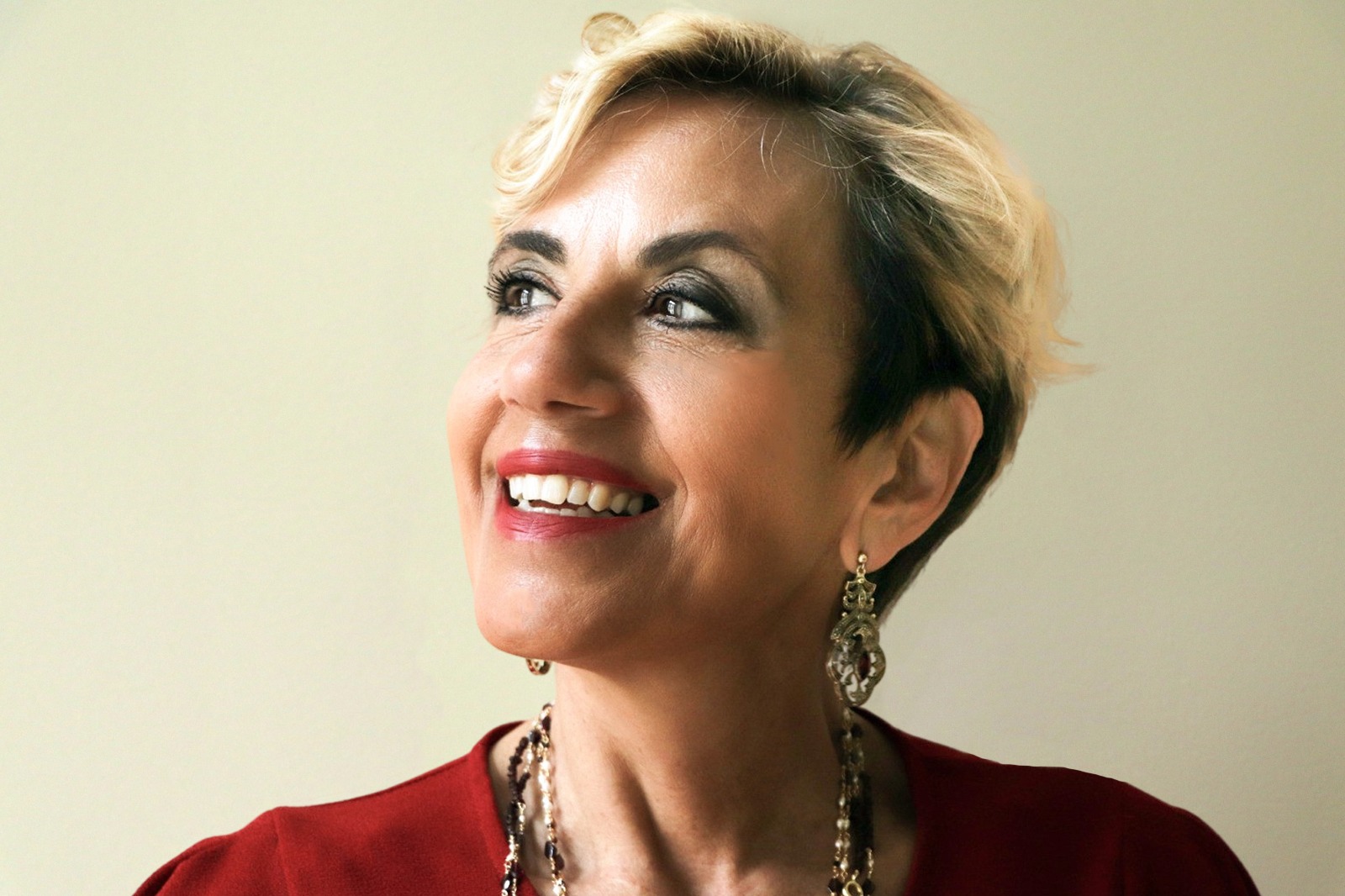
Tiziana Catarci has been a full professor of computer engineering since 2000, director of the Department of Computer, Control, and Management Engineering of Sapienza University of Rome until 2024. Since May 2025, she is the director of the Institute of Cognitive Sciences and Technologies of the National Research Council, Italy. Her research activity has focused on the fields of HCI and databases (a subset of her articles can be found here) and, recently, on ethics and Artificial Intelligence, being also among the founding members of SIpEIA, the Italian Society for the Ethics of Artificial Intelligence, of which she is president since 2024. In 2020, she was included in the list of the World's Top 2% Scientists created by Stanford University. In 2016, she was included among the 100 women for science of the Bracco Foundation project, and, over the years, she has received many awards and recognitions. Finally, Tiziana Catarci is very active in the fight against gender disparities and in the promotion of STEM disciplines among female students through dedicated projects at both school and university levels, including "Inspiring Girls" and "G4Greta".

Loading... Loading...